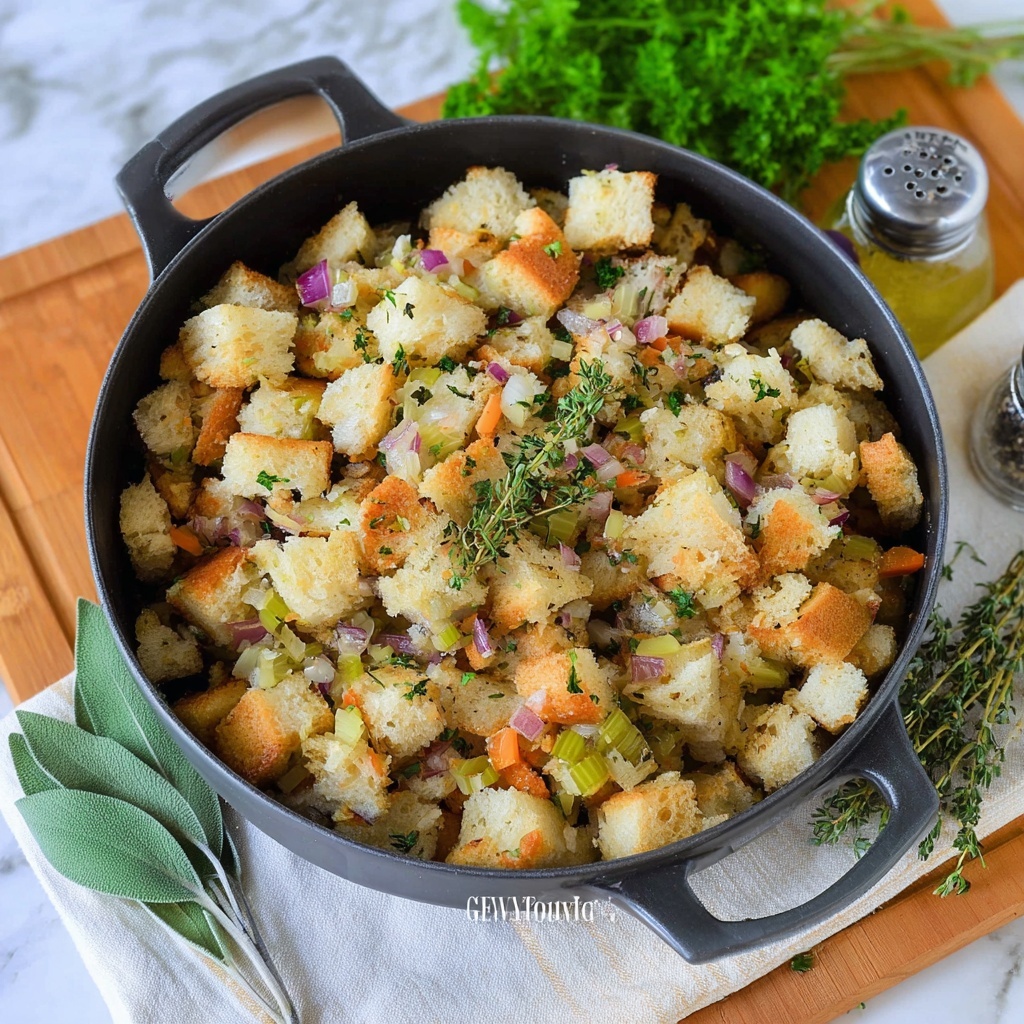
If you’re anything like me, there’s something irresistibly comforting about a perfectly made stuffing that brings everyone around the table together. This Homemade Stovetop Stuffing Recipe is my go-to secret for that rich, savory flavor with just the right hint of herbs and tender, golden bread cubes. It’s not just a side dish, but a star that adds warmth and nostalgia to any meal, especially during the holidays or cozy family dinners. Trust me, once you try this recipe, you’ll never want to go back to boxed stuffing again.

Ingredients You’ll Need
Don’t let the ingredient list intimidate you—each component is straightforward but essential to creating the vibrant taste, texture, and aroma of this homemade stuffing. The freshness of the herbs, the buttery vegetables, and the mix of breads work together to make every bite unforgettable.
- Sourdough sandwich bread: Adds tangy flavor and sturdy texture that holds up well to soaking.
- Potato or buttermilk sandwich bread: Brings softness and a subtle sweetness; I love using Oroweat Country Style Potato Bread.
- Butter: Provides rich creaminess and helps sauté the vegetables to perfection.
- Diced onion: Offers a slightly sweet sharpness that forms the flavor base.
- Diced celery: Adds a classic crunch and freshness.
- Diced carrot: Brings color and gentle sweetness that balances the savory notes.
- Minced garlic: Boosts the fragrant depth with a mild kick.
- Fresh Italian parsley: Lends a bright, herbaceous finish.
- Dried sage: Essential for that traditional earthy, slightly peppery flavor.
- Poultry seasoning: Complements the stuffing with aromatic warmth.
- Dried thyme: Adds a subtle woodsy, lemony layer.
- Dried marjoram: Imparts a sweet, floral touch.
- Salt: Enhances all the flavors beautifully.
- Freshly ground black pepper: Provides a mild heat and complexity.
- Low-sodium chicken or vegetable broth: Hydrates the bread cubes for moist, tender stuffing while infusing a gentle savory base.
How to Make Homemade Stovetop Stuffing Recipe
Step 1: Prepare and Toast the Bread
First, preheat your oven to 375 degrees F. Take your sourdough and potato breads, stack 2 or 3 slices, and slice them into ¼-inch thick pieces. Then cut these pieces crosswise into small cubes, aiming for about 10 to 11 cups total. Place these cubes evenly on a rimmed baking sheet and bake them for 12 to 15 minutes, tossing halfway through. You want the bread golden brown and crisp but not burnt—this ensures your stuffing will have a delightful texture and absorb the broth perfectly.
Step 2: Cook the Vegetables and Build Flavor
While the bread is toasting, melt the butter in a Dutch oven or a large, deep pot. Toss in the diced onion, celery, and carrot, and let them cook on medium-high heat for 8 to 10 minutes until tender, stirring often. Be mindful to keep the veggies from browning — just soft and fragrant is perfect. Next, stir in garlic and parsley, cooking for an additional minute to release their aromas. This step lays down the foundation for your stuffing’s richness and depth.
Step 3: Add Herbs and Combine Ingredients
Lower the heat to medium and sprinkle in the poultry seasoning, sage, thyme, marjoram, salt, and pepper. Stir everything thoroughly to blend those fragrant herbs and spices into the softened vegetables. Then add the toasted bread cubes back into the pot. Pour in 2 cups of broth and gently toss the mixture to coat all the cubes evenly. If you prefer a moister consistency, slowly add up to ½ cup more broth—remember, the bread should be tender, not soggy.
Step 4: Let It Rest and Fluff
Cover your pot, remove it from the heat, and let the stuffing sit for 10 to 15 minutes. This resting time allows the flavors to marry and the bread cubes to fully absorb the savory broth. When ready, uncover and fluff gently with a spoon or fork to give it light, airy texture. This step transforms your stovetop creation into the irresistible centerpiece it deserves to be.
How to Serve Homemade Stovetop Stuffing Recipe
Garnishes
Sprinkling a little extra chopped fresh parsley on top just before serving adds a burst of color and freshness, making the dish look as vibrant as it tastes. If you like a bit of zing, a drizzle of melted butter or a scattering of toasted pecans can add lovely richness and texture.
Side Dishes
This Homemade Stovetop Stuffing Recipe pairs beautifully with all kinds of mains. Think roasted turkey or chicken, baked ham, or even a hearty vegetarian mushroom gravy. Steamed green beans, roasted Brussels sprouts, or glazed carrots complement the flavors and make your meal a colorful, balanced feast.
Creative Ways to Present
For a festive touch, try serving the stuffing in individual mini cast-iron skillets or hollowed-out bell peppers. You could also stuff large portobello mushrooms or use it as filling for baked acorn squash halves. Not only does this create a wow factor, but it also makes each portion feel extra special.
Make Ahead and Storage
Storing Leftovers
If you find yourself with any leftover stuffing, let it cool completely before transferring it to an airtight container. Stored in the refrigerator, it will keep for up to 4 days without losing its flavor or texture.
Freezing
This Homemade Stovetop Stuffing Recipe freezes wonderfully. Place cooled stuffing in a freezer-safe bag or container, removing as much air as possible. It will maintain its deliciousness for up to 3 months, so you can enjoy a taste of comfort whenever you like.
Reheating
To reheat, thaw the stuffing in the refrigerator overnight if frozen. Warm it gently in a covered skillet over medium heat or in the oven at 350 degrees F until heated through. Adding a splash of broth or butter during reheating restores its moisture and keeps it fluffy.
FAQs
Can I use different types of bread?
Absolutely! While sourdough and potato bread offer great taste and texture, you can substitute your favorite sandwich breads. Just make sure to toast the cubes well so they hold up when mixed with broth.
Is it possible to make this recipe vegetarian?
Yes! Simply swap out chicken broth for vegetable broth, and you’ll still get fantastic flavor that’s perfect for vegetarian guests or meatless meals.
How do I adjust the recipe for a larger crowd?
It’s easy to scale this recipe up proportionally. Just be sure you have a large enough pot to mix everything thoroughly and toast enough bread to keep the texture just right.
Can I prepare the stuffing completely ahead of time?
You can assemble everything and refrigerate the mixture before the resting step, but for best texture, it’s recommended to fluff and serve just after resting to avoid sogginess.
What can I add to change the flavor profile?
Feel free to experiment by adding cooked sausage, chopped apples, nuts, or dried cranberries. Each addition brings exciting new layers to this classic Homemade Stovetop Stuffing Recipe.
Final Thoughts
I can’t wait for you to try this Homemade Stovetop Stuffing Recipe and experience how delightfully easy it is to make a stuffing that tastes like it took hours but really comes together with simple ingredients and love. It’s the ultimate cozy side that brings warmth to your table and smiles to your loved ones. Happy cooking!
Print
Homemade Stovetop Stuffing Recipe
- Prep Time: 15 minutes
- Cook Time: 30 minutes
- Total Time: 45 minutes
- Yield: 6 servings
- Category: Side Dish
- Method: Stovetop
- Cuisine: American
Description
This homemade stovetop stuffing recipe features a delicious blend of sourdough and potato bread toasted to perfection, combined with a savory medley of sautéed vegetables and herbs. Infused with classic poultry seasonings and fresh parsley, this stuffing is moist, flavorful, and easy to prepare on the stovetop, making it a comforting side dish perfect for holiday meals or everyday dinners.
Ingredients
Bread
- 5 slices sourdough sandwich bread
- 5 slices potato or buttermilk sandwich bread (e.g., Oroweat Country Style Potato Bread)
Vegetables & Herbs
- 1 ½ cups diced onion
- 1 ½ cups diced celery
- ½ cup diced carrot
- 2 tablespoons minced garlic
- ¼ cup chopped fresh Italian parsley
Seasonings
- 1 teaspoon dried sage
- ½ teaspoon poultry seasoning
- ½ teaspoon dried thyme
- ½ teaspoon dried marjoram
- 1 teaspoon salt
- Freshly ground black pepper, to taste
Other Ingredients
- ½ cup butter
- 2 to 2 ½ cups low-sodium chicken or vegetable broth (divided)
Instructions
- Preheat Oven: Preheat your oven to 375 degrees F to prepare for toasting the bread cubes.
- Cube the Bread: Stack 2 or 3 slices of bread and cut them into ¼-inch thick slices, then cut those slices crosswise into ¼-inch cubes. Repeat with all bread slices until you have approximately 10 to 11 cups of cubed bread.
- Toast Bread Cubes: Spread the bread cubes evenly on a rimmed baking sheet and bake for 12 to 15 minutes until golden brown and well toasted, tossing halfway through to ensure even crisping.
- Sauté Vegetables and Herbs: While the bread is toasting, melt the butter in a Dutch oven or large deep pot over medium-high heat. Add diced onion, celery, and carrot and cook for 8 to 10 minutes until tender, stirring frequently. If vegetables or butter start to brown too much, reduce heat slightly. Add minced garlic and chopped parsley, cooking and stirring for another 1 to 2 minutes.
- Season and Combine: Reduce heat to medium, then add poultry seasoning, dried sage, thyme, marjoram, salt, and black pepper. Stir to combine well. Add the toasted bread cubes and 2 cups of the broth, tossing lightly to mix. Add more broth as needed to reach your preferred stuffing consistency.
- Set and Fluff: Cover the pot and remove it from heat. Let the stuffing sit for 10 to 15 minutes to absorb the flavors and broth. Once rested, fluff the stuffing gently with a spoon and serve warm.
Notes
- You can use low-sodium chicken or vegetable broth to control the saltiness of the stuffing.
- Adjust the quantity of broth depending on whether you prefer a wetter or drier stuffing.
- Using a mix of bread types adds extra flavor and texture variety.
- Fresh herbs can be used instead of dried if preferred; adjust quantities accordingly.
- This stuffing can be re-heated gently on the stovetop or in the oven covered with foil.